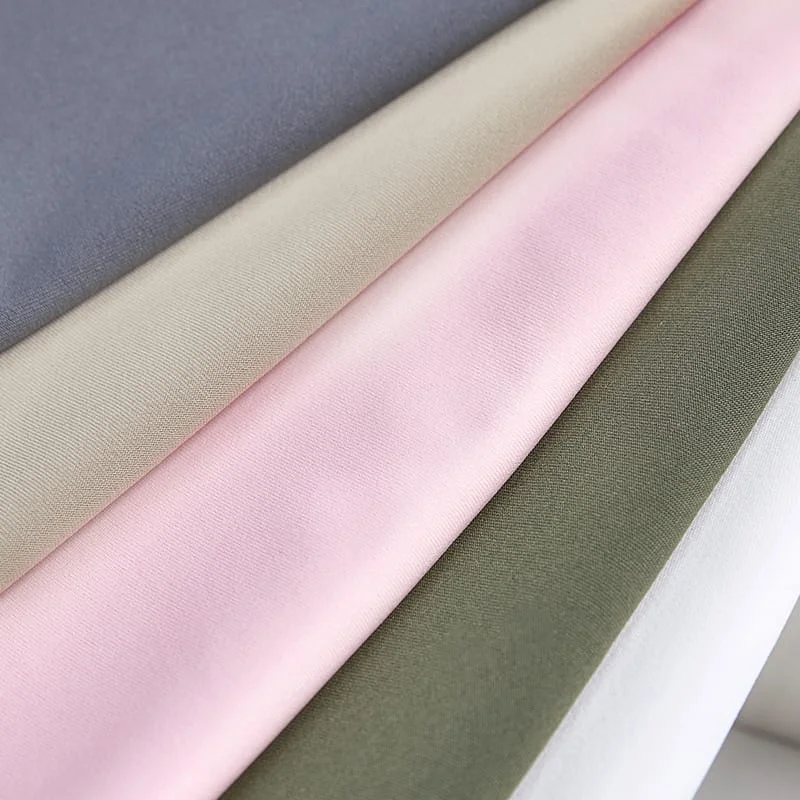
Is Polyester Stretchy? The Complete Fabric Guide
In the world of textile manufacturing and fashion design, few materials are as ubiquitous—and misunderstood—as polyester. Whether you are a brand owner sourcing materials for a new activewear line or a consumer trying to determine if that new dress will fit comfortably, the question inevitably arises: is polyester stretchy?
The answer isn't a simple yes or no. Unlike natural rubber or elastane, polyester fibers themselves are incredibly strong and rigid. However, walk into any gym, and you will see polyester leggings, jerseys, and compression gear stretching and moving with the athletes. This contradiction creates confusion. How can a rigid fiber create the most flexible garments on the market?
The secret lies in the interplay between fiber technology, fabric construction (knitting vs. weaving), and blending strategies. At Huada Creation Group, we specialize in engineering high-performance textiles that leverage the durability of polyester while introducing the flexibility required for modern apparel. In this comprehensive guide, we will break down the mechanics of polyester elasticity, explore the difference between mechanical and elastic stretch, and help you choose the right fabric for your specific needs.
The Short Answer: Is Polyester Stretchy?
To understand polyester's elasticity, we must distinguish between the fiber and the fabric.
Technically, polyester fiber is not stretchy. Polyester is a synthetic polymer made from polyethylene terephthalate (PET). Imagine a single strand of polyester like a very thin piece of fishing line or plastic wire. If you pull on it, it resists elongation. It has high tensile strength and excellent shape retention, which is why it is prized for durability. It does not have the natural 'bounce-back' properties of rubber or spandex.
However, polyester fabric can be incredibly stretchy. While the fiber itself is rigid, the way those fibers are put together determines the elasticity of the final material. Through specific manufacturing techniques—such as knitting loops or blending the poly fibers with elastane—textile engineers can create polyester fabrics that stretch up to 500% of their original size.
Therefore, when you ask "is polyester stretchy," the answer depends entirely on how the fabric was engineered. A 100% polyester woven raincoat will have almost zero stretch, whereas a 100% polyester jersey knit will have a moderate amount of 'give,' and a polyester-spandex blend will offer high-performance elasticity.
100% Polyester vs. Blends: Understanding the Difference
The most common way to introduce true elasticity into a garment is by blending polyester with other fibers. While 100% polyester has its place in the market, the demand for form-fitting apparel has led to the rise of poly-blends.
100% Polyester
Fabrics made exclusively from polyester are known for their dimensional stability. They hold their shape, resist shrinking, and are incredibly durable. However, they lack 'snap-back' elasticity. If you force 100% polyester to stretch beyond its mechanical limit, it may warp or tear. This composition is ideal for loose-fitting garments like board shorts, windbreakers, or specific mesh linings where structure is more important than flexibility.
Polyester-Spandex Blends
This is where the magic happens. By blending polyester with Spandex (also known as Elastane or Lycra), manufacturers create a fabric that combines the durability and colorfastness of polyester with the extreme stretch of spandex.
For example, our HD8193 - High-Performance Spandex Fabric is engineered specifically for this purpose. Even a small addition of 5% to 15% spandex transforms the material, allowing it to stretch significantly and, crucially, return to its original shape immediately. This 'recovery' is essential for Yoga Fabric and Swimwear Fabric, ensuring that leggings don't sag at the knees after an hour of wear.
Another excellent example of functional blending is the HD6850 - Polyester Spandex Eyelet Mesh. Here, the blend provides the stretch necessary for movement, while the eyelet construction ensures breathability, making it a staple for athletic jerseys and activewear linings.
Mechanical Stretch: Knits vs. Woven Fabrics
If you don't add spandex, can polyester still stretch? Yes, through a phenomenon called mechanical stretch. This type of elasticity comes from the physical construction of the fabric rather than the chemical properties of the fiber.
Woven Polyester
Woven fabrics are created by interlacing two sets of yarns at right angles (warp and weft). This grid-like structure is stable and rigid. A 100% polyester woven shirt will have very little give. It is designed to drape, not to stretch. If you pull it, the yarns lock against each other.
Knit Polyester
Knitting involves interlocking loops of yarn. Think of a hand-knitted scarf; even if the wool isn't elastic, the loop structure allows the fabric to distort and stretch when pulled. This is true for polyester as well.
Jersey Fabric is the most common example of this. A 100% polyester t-shirt made of jersey knit will stretch horizontally because the loops can widen.
At Huada, we utilize advanced knitting techniques to maximize this effect.
- HD8008 - Cotton-Like Waffle Knit: The waffle texture creates a three-dimensional structure that allows for significant expansion and flexibility, even without a high spandex content.
- HD7916 - Terry Cloth (Fleece): The loop pile construction of French Terry or Fleece adds volume and a degree of mechanical stretch, making it cozy and flexible for loungewear.
- HD8001 - Bird's Eye Mesh Fabric: The open-knit structure of this fabric provides excellent mechanical stretch, making it a top choice for sports uniforms where breathability and range of motion are key.
Why Stretch Matters in Textile Manufacturing
For brands and manufacturers, understanding the nuances of polyester stretch is critical for product success. The level of stretch dictates the end-use application, the sizing chart, and the customer satisfaction levels.
- Fit and Sizing: High-stretch fabrics, like our HD7887 - Cotton-Like Fish Scale Knit, are more forgiving regarding sizing. A rigid fabric requires precise tailoring and often darts or pleats to fit the human body, whereas a stretchy knit can mold to different body shapes comfortably.
- Performance: In activewear, the fabric must move with the skin. If a cyclist wears rigid pants, the fabric creates friction and restricts the pedal stroke. High-performance options utilizing 4-way stretch allow for uninhibited movement.
- Durability: Stretch adds to the lifespan of a garment. When a wearer bends an elbow or knee, rigid fabrics experience high stress at the seams, leading to rips. Stretchy fabrics absorb that energy by expanding.
Designers often turn to specialized textures to combine aesthetics with stretch. The HD7901 - Great Wall Grid Pattern and HD8029 - Distressed Look Knit Fabric are prime examples where visual interest is paired with the functional mechanical stretch of the knit structure.
Does Polyester Stretch or Shrink in the Wash?
One of the primary advantages of polyester over natural fibers like cotton is its resistance to shrinking and warping in the wash—provided it is treated correctly.
Does it stretch in the wash? generally, no. Polyester is heat-set during manufacturing. This means the fibers are locked into a specific shape. Washing polyester in cool or warm water will not cause it to stretch out or become baggy. Unlike cotton, which absorbs water and becomes heavy and misshapen when wet, polyester is hydrophobic (repels water) and retains its tension.
Does it shrink? Polyester is resistant to shrinking, but it is not invincible. High heat is the enemy. If you wash polyester in scalding hot water or blast it in a dryer on the highest setting, the polymer fibers can soften and slightly distort or shrink. However, compared to a 100% cotton garment which might shrink 5-10%, polyester's shrinkage is negligible.
For fabrics like our HD8067 - Cotton-Like Pique Fabric, users get the best of both worlds: the soft, premium hand-feel of cotton with the wash-and-wear stability of polyester.
Comparing Polyester to Other Fabrics
To truly grasp where polyester sits on the elasticity spectrum, it helps to compare it to other common textile materials.
- Polyester vs. Cotton: Cotton fibers have very little natural elasticity and poor recovery. A 100% cotton t-shirt will stretch out over the course of the day (bagging at the elbows or knees) and requires washing to shrink back. Polyester, especially when knitted or blended, retains its 'memory' much better, snapping back to its original shape.
- Polyester vs. Nylon: Nylon is naturally softer and slightly stretchier than polyester fiber. However, nylon is more expensive and can be less durable against UV rays. Polyester offers a more cost-effective solution with comparable stretch when engineered correctly.
- Polyester vs. Elastane (Spandex): There is no contest here. Elastane can stretch 500-700% without breaking. Polyester provides the structure, while elastane provides the stretch. They are partners, not competitors.
For applications requiring the look of natural fiber but the performance of synthetic, Cotton Jersey Fabric blends or our specialized Cotton-Like polyester series offer the ideal balance.
Sourcing the Right Polyester for Your Product Line
When sourcing fabric, simply asking "is it stretchy?" is not enough. You need to define the type of stretch required for your product.
- For T-Shirts and Polos: You likely need 2-way mechanical stretch. HD8067 - Cotton-Like Pique Fabric or standard Jersey Fabric is ideal. It stretches across the body for comfort but doesn't sag vertically.
- For Leggings and Yoga Wear: You need 4-way elastic stretch (stretching both lengthwise and widthwise) with high recovery. Look for HD8193 - High-Performance Spandex Fabric or high-GSM interlock knits.
- For Fashion and Outerwear: You might prioritize texture over high elasticity. HD7912 - Premium Printed Fabric or HD8029 - Distressed Look Knit Fabric offers unique visuals with moderate mechanical give.
At Huada Creation Group, we understand that the 'stretch' factor is a defining characteristic of your final product. Whether you need the breathable flexibility of HD8001 - Bird's Eye Mesh or the cozy give of Fleece Fabric, our catalog is engineered to meet diverse elasticity requirements.
Conclusion
So, is polyester stretchy? The answer is a qualified yes. While the fiber itself is a pillar of strength and rigidity, modern textile engineering has transformed polyester into one of the most versatile and flexible materials on the planet. Through advanced knitting structures (mechanical stretch) and strategic blending with spandex (elastic stretch), polyester drives the activewear and comfort-apparel industries.
Understanding the nuances of 2-way vs. 4-way stretch, and the difference between knits and wovens, empowers you to make better sourcing decisions. Whether you are looking for the high-compression performance of our HD8193 or the casual comfort of our Cotton-Like Waffle Knit (HD8008), Huada Creation Group offers the innovation required to bring your designs to life with the perfect amount of stretch.
Frequently Asked Questions
Does 100% polyester stretch over time?
Generally, no. 100% polyester is known for its high shape retention and dimensional stability. Unlike cotton, which can permanently loosen and bag out after repeated wear, polyester fibers are resilient and tend to keep their original shape. However, if the fabric is a loose knit, the structure itself might loosen slightly, but the fibers do not elongate permanently.
Is polyester stretchier than cotton?
In terms of fiber, neither is naturally elastic. However, in terms of fabric performance, polyester usually offers better 'recovery.' Cotton may stretch out (deform) easier, but it doesn't snap back well. Polyester knits or blends are generally considered 'stretchier' in a functional sense because they can be engineered to stretch significantly and return to shape, whereas cotton simply loses its structure.
How do I make polyester fabric stretchy?
You cannot make an existing piece of rigid polyester fabric stretchy chemically. Stretch is determined during manufacturing. To ensure polyester is stretchy, you must either choose a knit construction (like jersey or waffle knit) which allows mechanical stretch through loops, or choose a blend that includes elastane (Spandex/Lycra).
What is the difference between 2-way and 4-way stretch polyester?
2-way stretch fabrics stretch in one direction, usually from selvedge to selvedge (across the body). This is common in basic t-shirts. 4-way stretch fabrics stretch in both directions: crosswise and lengthwise. This is essential for activewear like yoga pants (e.g., our HD8193 fabric) to allow total freedom of movement without restricting the wearer.
Does polyester loosen up after wearing it?
Polyester is resistant to 'bagging out.' While a polyester garment might relax slightly as it warms up against your body, it will typically return to its original size once taken off and washed. It does not permanently loosen up the way denim or 100% cotton does.