Fabric Texture Guide: Types, Benefits & Sourcing
In the competitive world of fashion and apparel manufacturing, color catches the eye, but texture captures the heart. While a bold print might attract a customer to a rack, it is the fabric texture—the tactile reality of the garment—that determines whether they take it to the fitting room and, ultimately, the checkout counter. For designers and sourcing managers, understanding the nuances of surface design is no longer a stylistic option; it is a commercial necessity.
Fabric texture refers to the physical surface characteristics of a textile, encompassing both its hand feel (tactile texture) and its visual depth (visual texture). It is the result of complex interactions between fiber selection, yarn spinning, knitting or weaving structures, and finishing processes. In the modern B2B landscape, texture serves as a silent ambassador for quality. A flat, lifeless fabric can make a garment feel cheap, while a rich, dimensional surface conveys luxury, durability, and technical sophistication.
At Huada Creation Group, we recognize that texture is the bridge between aesthetic vision and functional performance. From the microscopic peaks and valleys of a moisture-wicking mesh to the cozy loft of a brushed fleece, texture dictates how a fabric interacts with the skin and the environment. This guide delves deep into the science and art of fabric texture, exploring how advanced knitting techniques create distinct surfaces, the functional benefits of textured textiles, and how to source the best materials for your next collection.
Understanding Fabric Texture: Tactile vs. Visual
When we discuss fabric texture, we are distinguishing between two distinct sensory experiences: the tactile and the visual. While they often overlap, understanding the difference is crucial for accurate sourcing and design specification.
Tactile Texture is the physical feel of the fabric against the skin. It is described using sensory adjectives such as rough, smooth, crisp, soft, grainy, or hairy. This is the primary driver of comfort. For instance, the HD7916 Terry Cloth (Fleece) offers a high-loft tactile experience that signals warmth and softness, making it ideal for loungewear. Conversely, a fabric like the HD8029 Distressed Look Knit Fabric might offer a drier, more granular hand feel that suggests ruggedness and vintage appeal without sacrificing the comfort of modern knitting.
Visual Texture refers to the illusion of depth or pattern created on the surface of the fabric by the interaction of light and shadow. Even if a fabric feels relatively smooth, it can have a 'rough' visual texture due to color variation or knitting patterns. A prime example is the HD7901 Great Wall Grid Pattern. The geometric arrangement creates a visual topography that adds sophistication to the garment, even if the physical profile remains streamlined. Similarly, the HD7912 Premium Printed Fabric utilizes print to create visual interest that mimics texture, adding complexity to the design without altering the physical weight of the material.
For high-performance sportswear, the intersection of these two is vital. A fabric must look technical (visual texture) to convey performance, but feel smooth (tactile texture) to prevent chafing during movement.
How Manufacturing Techniques Create Texture
Texture is rarely accidental; it is engineered. Manufacturers like Huada Creation Group utilize specific machinery and yarn technologies to manipulate the surface of the fabric. There are three primary stages where texture is introduced:
1. Yarn Selection and Spinning The foundation of texture lies in the yarn. Using high-twist yarns can create a crisp, dry crepe effect, while slub yarns (which vary in thickness) create an organic, uneven surface. However, modern innovation allows synthetic fibers to mimic natural textures. Our HD8067 Cotton-Like Pique Fabric uses advanced polyester filament technology to replicate the dry, breathable touch of cotton while maintaining the durability and colorfastness of synthetics.
2. Knitting Structure The way loops are interlocked determines the surface topography.
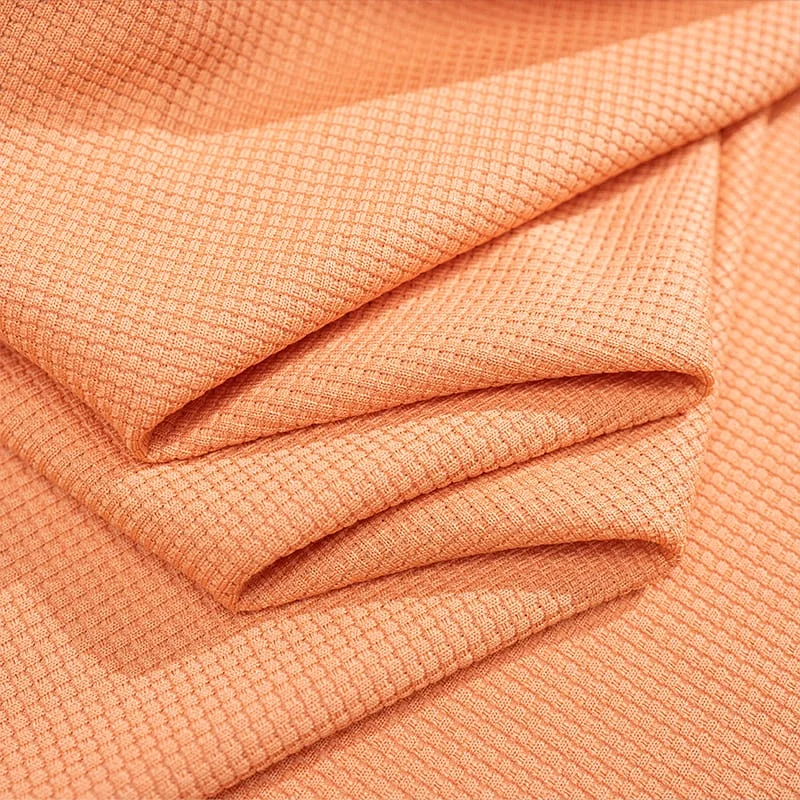
- Loop Formation: By alternating knit and purl stitches, or by introducing tuck stitches, manufacturers create 3D structures. The HD8008 Cotton-Like Waffle Knit is a classic example where the knitting structure creates a honeycomb pattern. This structural texture isn't just for looks; the pockets created by the waffle pattern trap body heat, providing insulation without weight.
- Mesh Constructions: By manipulating needle selection to create open spaces, we achieve textures like the HD6850 Polyester Spandex Eyelet Mesh. Here, the texture is defined by the negative space (the holes), which facilitates airflow.
3. Finishing Processes Post-production finishing can dramatically alter texture. Mechanical brushing pulls fibers from the yarn to the surface, creating a 'nap' or fuzz, as seen in fleece and French terry. Chemical treatments can also be used to induce shrinkage in specific areas, creating a puckered or seersucker effect. The HD7887 Cotton-Like Fish Scale Knit utilizes a specific loop-back construction often enhanced by finishing to ensure the interior feels soft against the skin while the exterior maintains a clean, structured appearance.
Top Textured Knits for Modern Apparel
In the current market, specific textured knits are dominating due to their versatility. Here is a breakdown of essential textures for modern apparel lines:
The Pique and Waffle Family Pique fabric is characterized by raised cords or geometric designs. It is the gold standard for polo shirts because the textured surface hides perspiration stains better than plain jersey and allows for breathability. The HD8067 Cotton-Like Pique provides that classic textured aesthetic with modern stretch performance. Similarly, Waffle knits (HD8008) are trending in casual wear for their thermal properties and distinct grid-like appearance.
Performance Mesh Texture in activewear often equals ventilation. 'Bird's Eye' is a specific knitting pattern that creates small, repetitive diamond or oval shapes resembling a bird's eye. The HD8001 Bird's Eye Mesh Fabric is a staple for athletic jerseys. The texture here serves a dual purpose: it reduces the surface area of fabric touching the skin (reducing cling when wet) and maximizes breathability.
Structured Ribs and Grids Rib fabrics offer texture through vertical lines created by alternating stitches. This texture provides natural elasticity, making it ideal for cuffs, necklines, and form-fitting tops. More complex variations, like the HD7901 Great Wall Grid Pattern, offer a architectural aesthetic that works well in 'athleisure'—clothing that transitions from the gym to the street.
Smooth Technical Knits Sometimes, the desired texture is 'sleekness.' The HD8193 High-Performance Spandex Fabric offers a smooth, slick texture that reduces aerodynamic drag and friction. While visually flat, the tactile texture is cool and compressive, signaling high-performance capability to the consumer.
Functional Benefits of Textured Fabrics
Why should brands prioritize fabric texture beyond mere aesthetics? Because texture performs. Integrating textured fabrics into a collection solves several functional problems for the end-user.
1. Moisture Management and Cooling Flat fabrics can stick to the skin when wet, causing discomfort and chilling. Textured fabrics, particularly meshes like the HD6850 Eyelet Mesh or piques, sit slightly off the skin. This 'stand-off' creates a micro-climate that allows air to circulate between the fabric and the body, speeding up evaporation and keeping the wearer dry.
2. Thermal Regulation Textures that have depth, such as fleece (HD7916) or waffle knits, trap stagnant air within their fibers or structure. Air is a poor conductor of heat, meaning these pockets of trapped air act as insulation. This allows designers to create warm garments that are surprisingly lightweight.
3. Durability and Aesthetics Textured fabrics are generally more forgiving than flat fabrics. A smooth satin or jersey shows every snag, wrinkle, and stain. A textured knit, such as the HD8029 Distressed Look Knit, naturally hides minor abrasions and wrinkling, making the garment look newer for longer. This is a critical selling point for travel wear and children's clothing.
4. Optical Slimming and Shaping Visual texture absorbs light rather than reflecting it. While shiny, smooth fabrics can highlight body contours and imperfections, matte, textured fabrics (like the HD7887 Fish Scale Knit) tend to diffuse light, providing a more flattering silhouette. This is a powerful tool in designing yoga wear and swimwear.
Sourcing Considerations for Textured Textiles
Sourcing textured fabrics requires a more hands-on approach than sourcing solids or prints. Here are key considerations for procurement teams working with suppliers like Huada Creation Group:
Consistency is Key Texture can vary slightly from batch to batch due to tension differences in the knitting machine or variations in yarn lots. When sourcing fabrics like the HD7901 Great Wall Grid, it is vital to establish 'limit samples' with your supplier to define the acceptable range of texture depth and definition.
The 'Cotton-Like' Revolution Many brands want the texture of cotton (soft, natural, matte) but the performance of polyester (wicking, durable, colorfast). Sourcing purely natural fibers can lead to shrinkage and fading issues. The solution lies in high-quality synthetics engineered to mimic natural textures. Huada's 'Cotton-Like' series (HD8067, HD7887, HD8008) offers the best of both worlds, allowing brands to maintain the premium hand feel of cotton without the functional downsides.
Weight vs. Texture Do not confuse weight with texture. A fabric can be lightweight yet highly textured (like a sheer mesh), or heavy but completely smooth (like a scuba knit). Always specify the GSM (grams per square meter) alongside the desired texture description. For example, the HD8193 High-Performance Spandex is substantial and supportive, yet smooth, whereas a lighter mesh might have significantly more surface variation.
Requesting Samples Because texture is tactile, it cannot be fully judged via digital photos. Always request physical hangers or swatches. When evaluating samples, stretch them. Does the texture distort? Does the HD8001 Bird's Eye Mesh open up too much? Does the HD7916 Fleece shed? Testing the physical sample is the only way to ensure the texture meets your quality standards.
Conclusion
Fabric texture is the silent language of apparel. It communicates quality, defines function, and dictates comfort. From the rugged appeal of a waffle knit to the aerodynamic sleekness of high-performance spandex, the topography of a textile is as important as its color or cut. As manufacturing technologies evolve, the ability to create complex, functional textures using durable synthetic blends—like Huada Creation Group's cotton-like series—gives designers unprecedented freedom.
Whether you are designing a breathable yoga set using HD6850 Eyelet Mesh or a premium hoodie with HD7887 Fish Scale Knit, prioritizing texture in your sourcing strategy is the key to creating garments that stand out in a crowded market. By partnering with experienced manufacturers who understand the science of surface design, brands can deliver products that look exceptional and feel even better.
Frequently Asked Questions
What is the difference between tactile and visual fabric texture?
Tactile texture refers to the actual physical feel of the fabric surface (e.g., rough, soft, bumpy), while visual texture refers to the appearance of depth or pattern created by light, shadow, or print, which may not necessarily correspond to how the fabric feels.
How does fabric texture impact moisture-wicking performance?
Textured fabrics, such as piques or meshes, often have a 3D structure that reduces the surface area in contact with the skin. This prevents the fabric from clinging when wet and creates channels for airflow, which accelerates evaporation and improves wicking compared to flat fabrics.
What are the best textured fabrics for activewear?
For activewear, the best textured fabrics include Mesh (like HD6850) for ventilation, Pique for breathable polo shirts, and smooth high-compression Spandex (like HD8193) for muscle support. Bird's Eye Mesh (HD8001) is particularly popular for team jerseys due to its durability and breathability.
Can synthetic polyester fabrics mimic the texture of natural cotton?
Yes. Through advanced air-jet spinning and texturizing processes, manufacturers can create polyester yarns that replicate the soft, matte hand feel of cotton. Huada's 'Cotton-Like' series (e.g., HD8067, HD8008) offers this natural texture with the added benefits of polyester's durability and moisture management.
Why is texture important in B2B fabric sourcing?
In B2B sourcing, texture indicates the quality and technical capability of the fabric. Unique textures can differentiate a brand's product line, increase the perceived value of the garment, and provide functional benefits (warmth, cooling) that justify higher price points to the end consumer.